MVL — Film & Virtual Production
Film productions waste weeks on decisions that could be made in minutes. MVL asked Astral City to fix that. We built Mihira Theatre: a bespoke previsualization tool that gives entire production crews a shared, real-time virtual stage, accessible from an iPad, powered by an AI animation stack, and designed to eliminate the handoff friction that costs productions time, money and creative momentum.
The decisions that cost the most are made the latest.
For most productions, previsualization is a guessing game. Blocking is planned without spatial reference. Camera angles approved without seeing the actual set. VFX requirements locked before anyone has stood in the scene. Each department works in sequence, not in concert, so every creative change means another round of revisions across multiple teams. By the time you shoot, much of the previz work has already been undone. Astral City began by mapping exactly where the pipeline breaks, through in-depth interviews with directors, DoPs, designers and producers.
A director-first previsualization tool, built for the pipeline and controlled from an iPad.
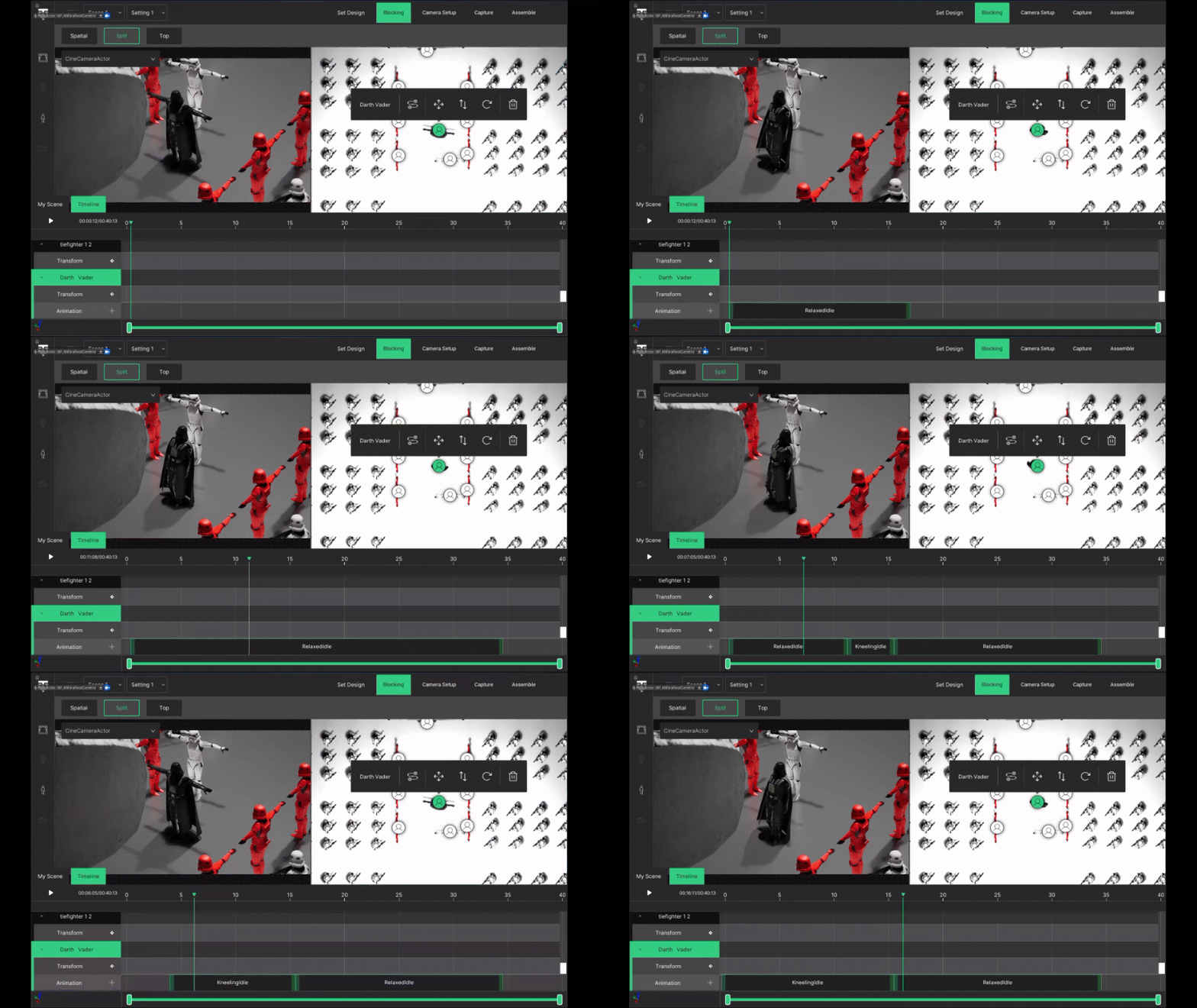
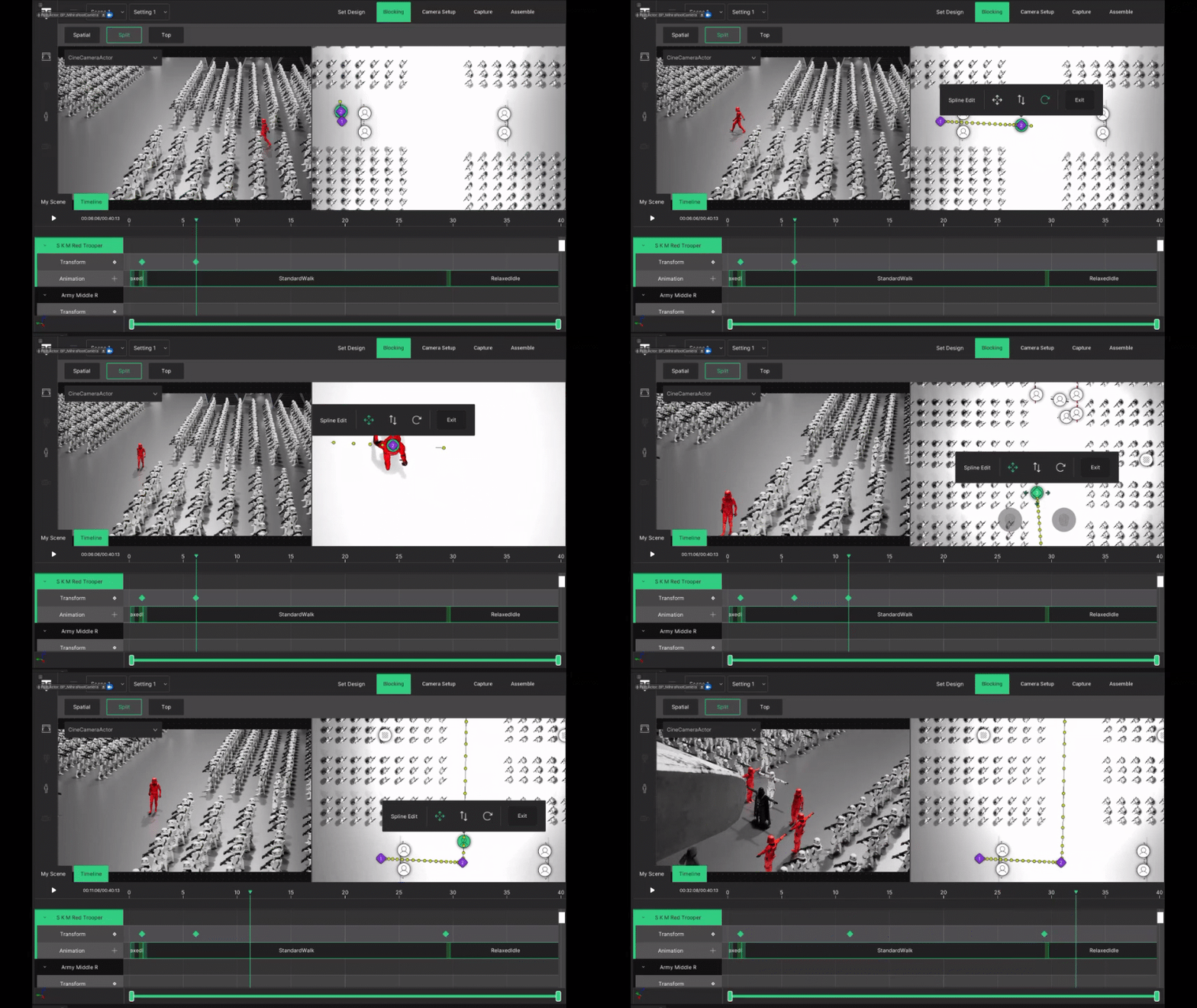
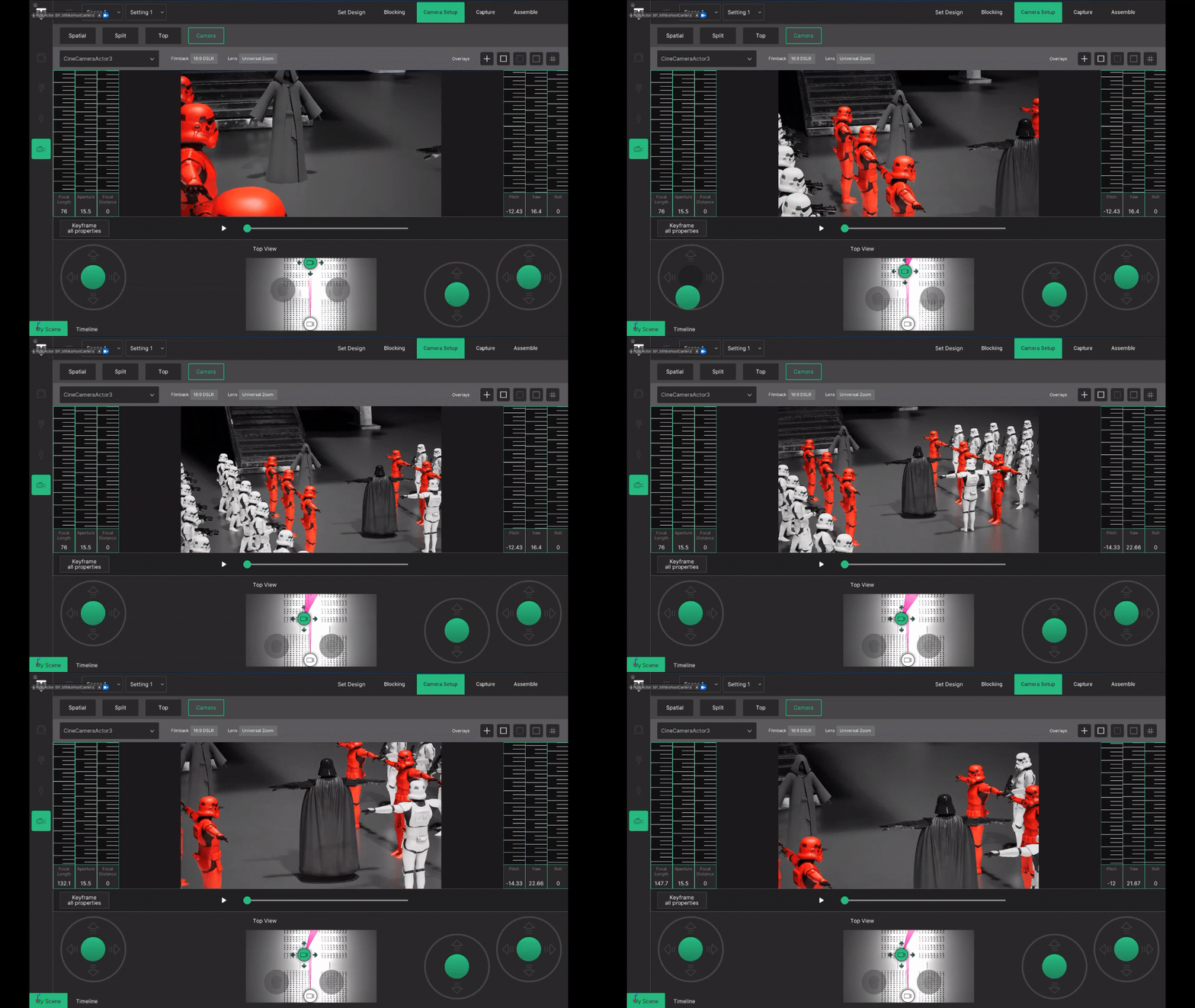
We designed and built Mihira Theatre from scratch: a custom internal tool running on Unreal Engine 5, with a touch-first iPad interface, AI-assisted animation and multiuser real-time collaboration. Built for five production roles. Designed for one pipeline. The PoC was structured across two phases: set design and character blocking, then performance capture and camera setup. We built 7 prototypes, completed 70 feature development tickets and ran iterative sessions with MVL's production team throughout.
Custom workflows, film-native language and role-specific interfaces for five production roles, from Director to Production Set Designer. The tool works because it was designed around how production teams actually work, not how engineers assumed they work.
GENMO for AI-generated human motion, Motorica for real-time character animation inside Unreal, Cascadeur for physics and stunt simulation, and Meshy for AI-accelerated 3D asset generation. AI animation accelerates blocking decisions without requiring full mocap sessions.
Unreal runs locally on a PC and streams to iPads via Pixel Streaming over WebRTC. Directors and crew control the full previz environment from a touch-first, role-specific interface, with no direct access to the underlying engine required. The tool fits the set.
Each role sees the environment from their own perspective, with changes propagating live across the whole team. Collaborative decisions surface conflicts before they become costs — exactly what sequential review processes miss.
"We took the power of Unreal Engine and put it in the hands of directors who have never touched a game engine."
7 prototypes. 70 features. One hypothesis proven.
The PoC validated three things: that the hybrid architecture delivered full engine capabilities through a touch-first interface; that AI animation could proxy blocking and motion decisions without full mocap sessions; and that multiuser real-time collaboration surfaced conflicts that sequential review processes miss entirely. Research confirmed a clear market gap: no existing tool serves live-action directors the way Mihira Theatre does.
Virtual production is changing fast. The tools need to catch up. Mihira Theatre is not just a PoC — it is a proof of a new production paradigm: one where creative decisions are spatial rather than abstract, collaborative rather than sequential, and grounded in real visual data rather than approximation. For Astral City, it demonstrates the ability to build bespoke internal tools at the intersection of AI, real-time engines and touch-first interfaces — tools that fit the actual shape of how production teams work.
Ready to build something like this? →