Meta Reality Labs
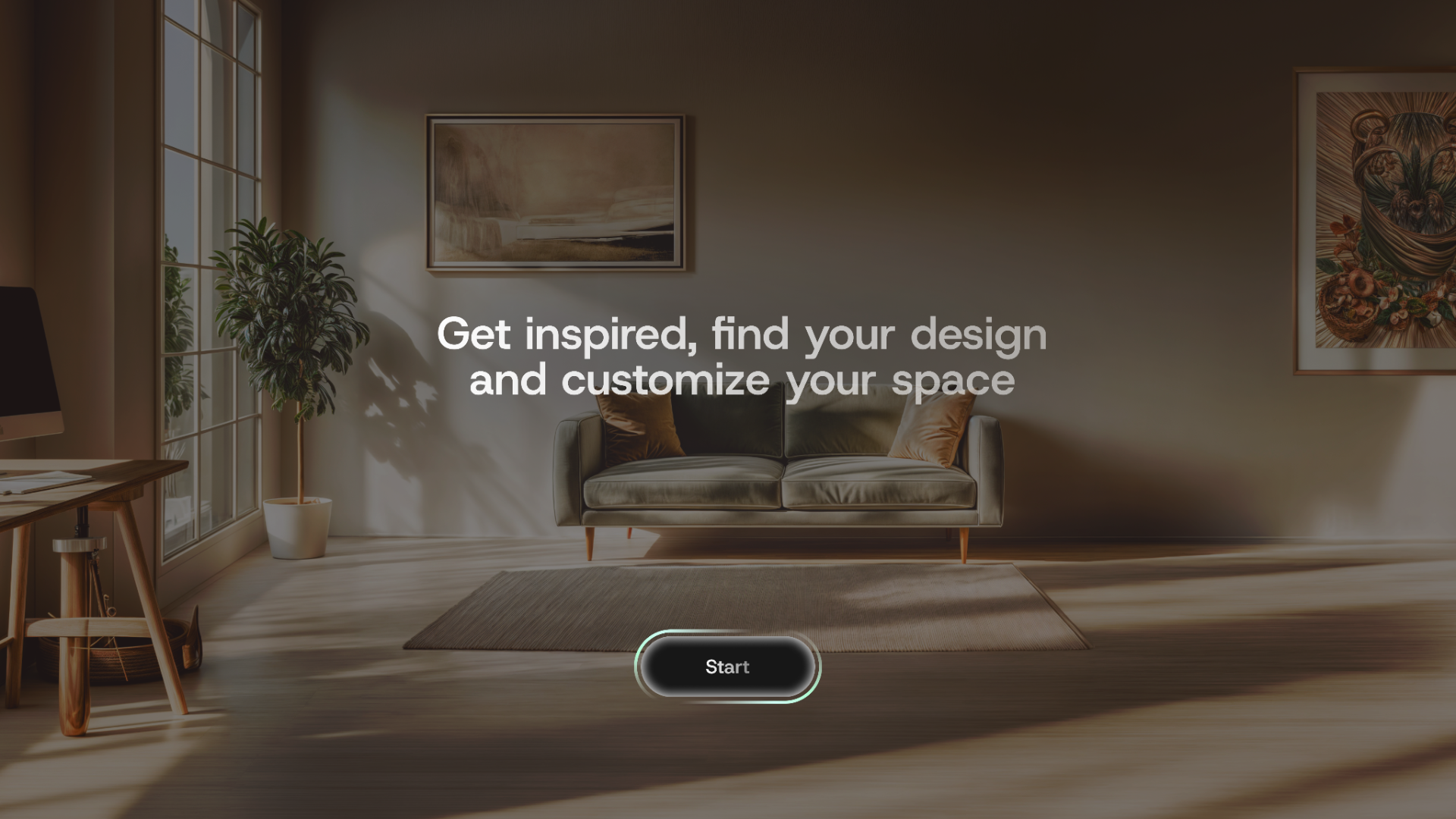
Meta Reality Labs engaged Astral City to prototype a Mixed Reality home decor shopping experience for Meta Quest. Stand in your living room, scan the space, browse a spatial catalogue of furniture and see any piece placed at true scale in your actual room. Space Styler proves that the closest possible proxy to real-world evaluation before purchase doesn't require a showroom. It requires a headset.
Online furniture shopping has a fundamental problem. You can't see how it fits.
Return rates in home decor e-commerce are among the highest of any category, driven almost entirely by size and fit mismatch. Customers browse flat images, guess at scale and hope for the best. Phone-based AR previews exist but distort scale and perspective, often making the problem worse. Meta Reality Labs wanted to know whether Mixed Reality could solve this at the root: furniture placed at true scale in the user's actual room, seen with their own eyes, before they buy.
A controller-free Mixed Reality shopping experience, built around how rooms actually work.
We built Space Styler as a complete spatial commerce experience on Meta Quest: scan the room, browse a spatial catalogue, and place furniture at true scale. No controllers. No floor plans. Just the actual room, with the actual furniture in it. The experience was structured around five interconnected flows: Onboarding, Browsing, Carousel, Placement and Review. The Dollhouse view added a second dimension — spatial composition. Users step back, see the whole room, check proportions and make ensemble decisions.
A proprietary semantic classification identifies walls, floor, windows and furniture zones — enabling catalogue items to be pinned and placed in contextually appropriate locations throughout the actual room.
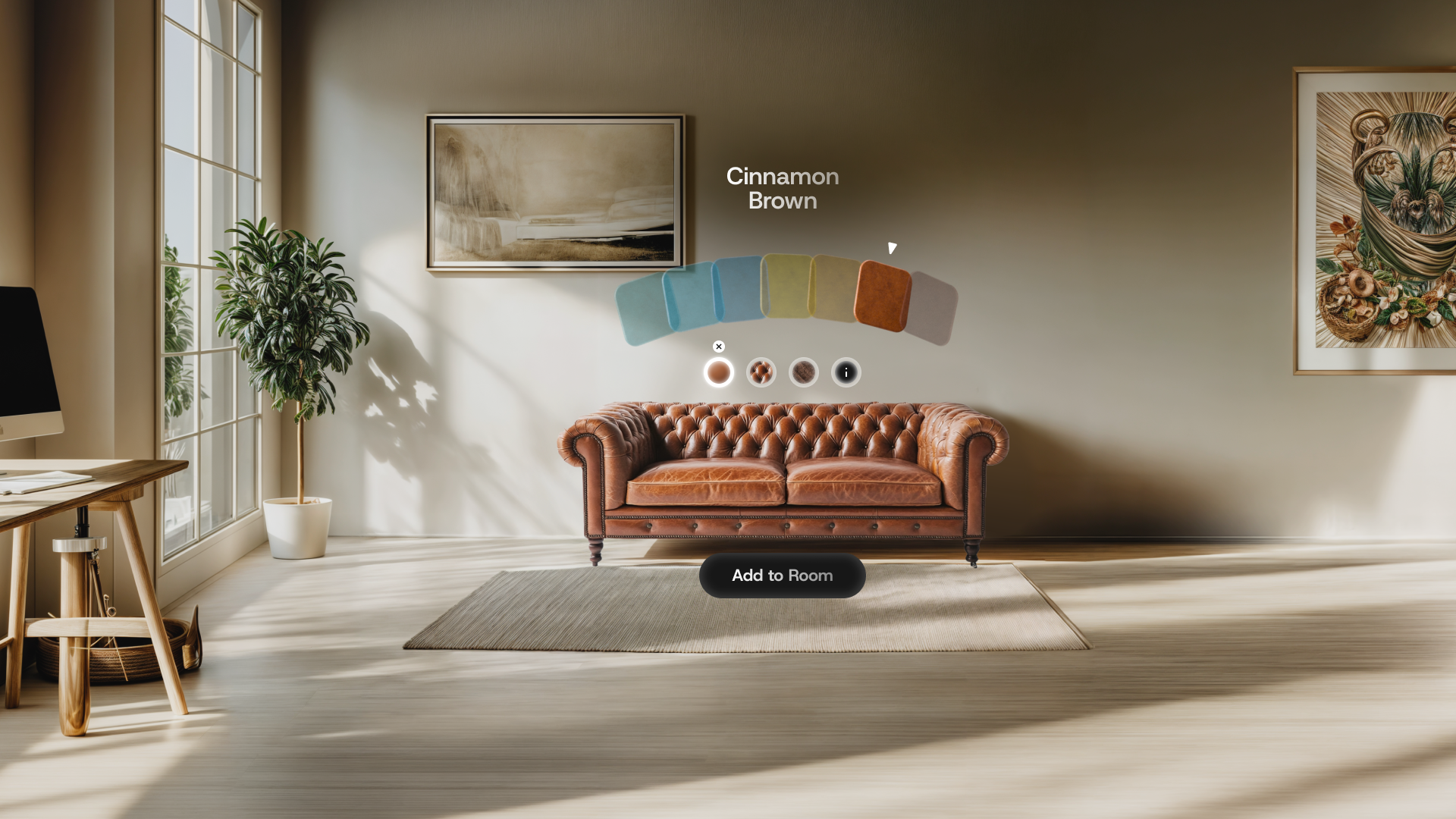
A hand-tracked carousel brings furniture options into the room. Pinch to select, swipe to browse, place at true scale. No controllers. No floor plans. The shopping experience works with the body, not around it.
A proprietary system developed to allow virtual furniture to adopt the room's ambient colour and light temperature — making pieces visually inhabit the space rather than float above it. The illusion holds because it has to.
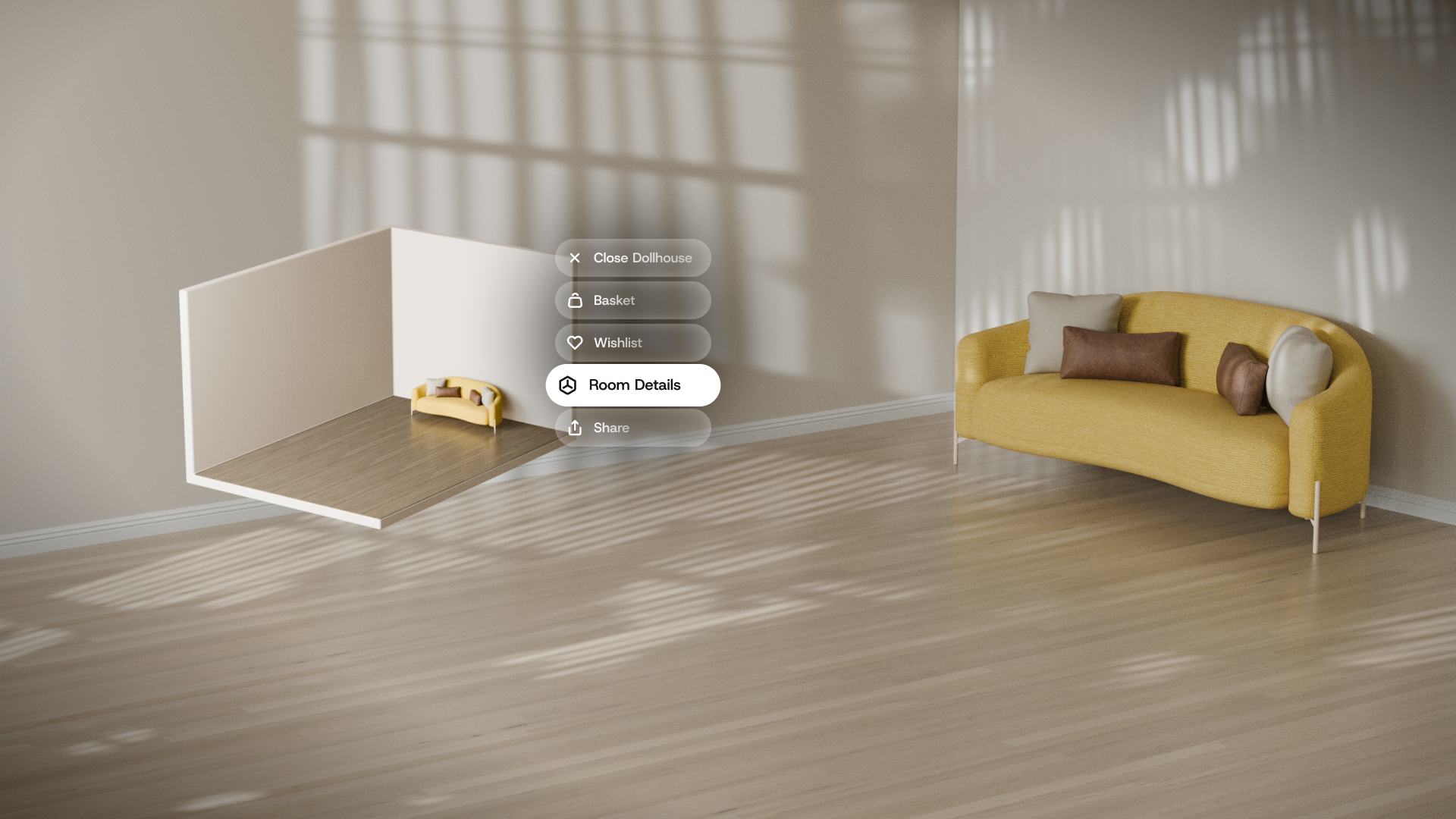
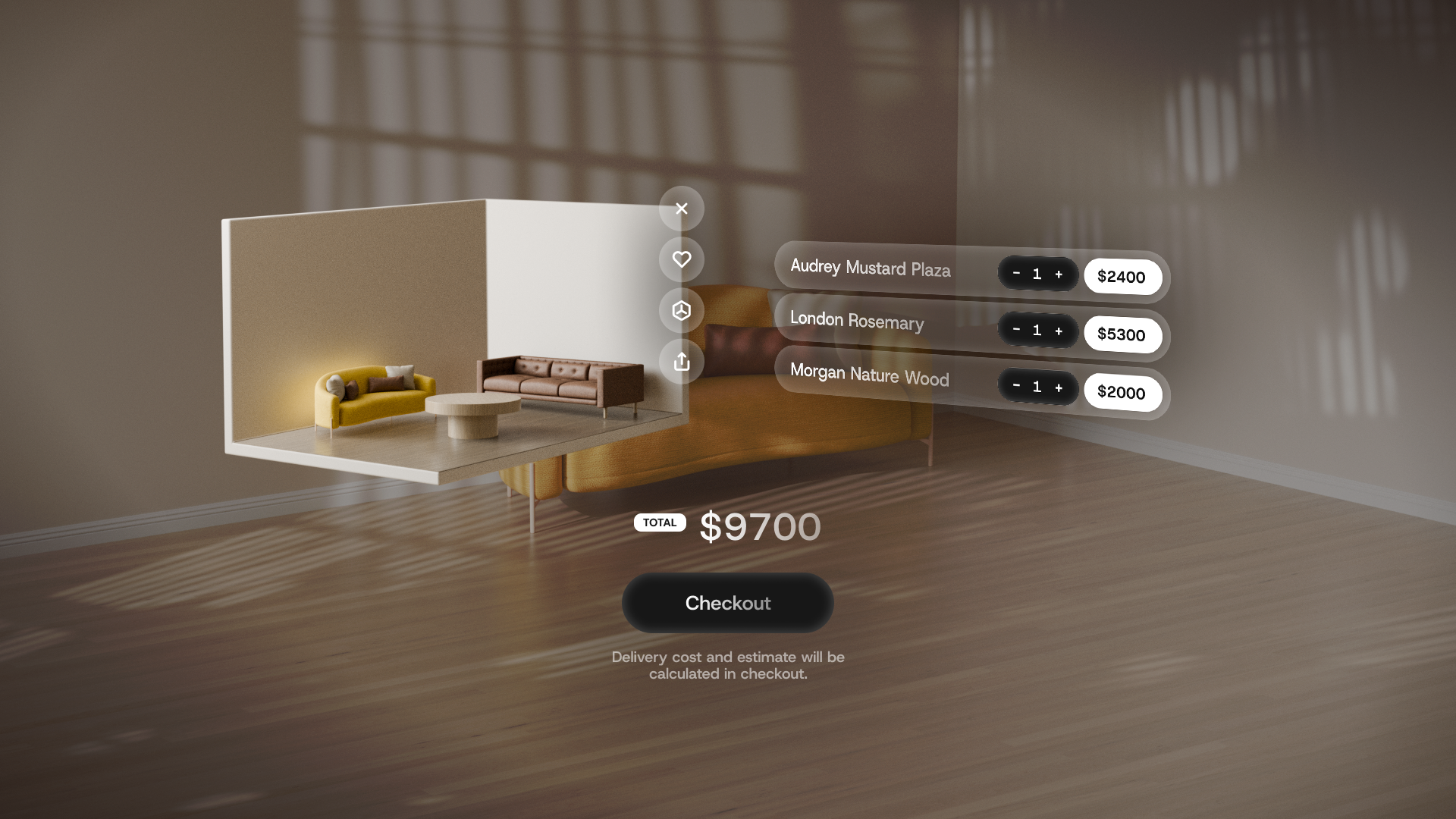
A miniature 3D overview of the full room with all placed items, running price total and a god's-eye view of the whole composition. Pick up a piece to re-arrange it, or throw it out to delete it. Composition is a shopping behaviour.
"Virtual furniture that floats over a room is a novelty. Virtual furniture that sits in your room is a shopping tool."
To see how new furniture fits, the old furniture has to go.
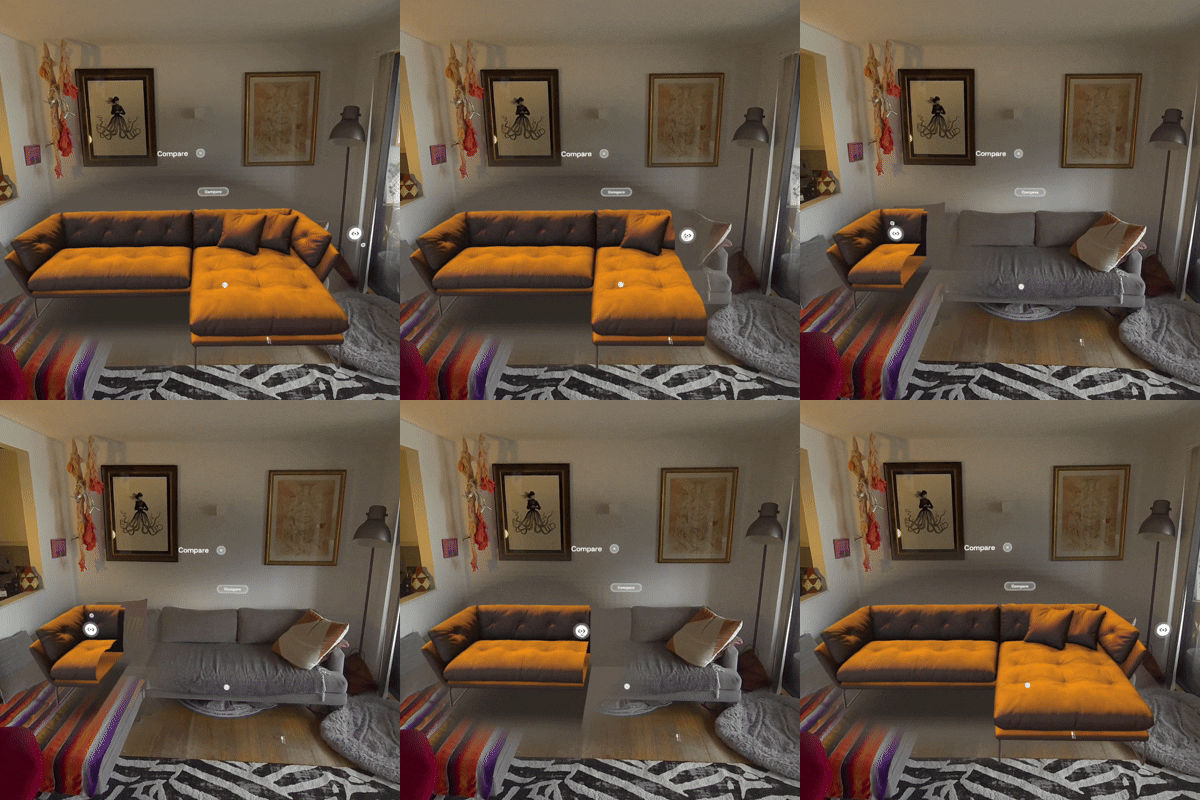
The core challenge isn't placing virtual furniture in a room. It's replacing what's already there. If a new sofa appears layered on top of your existing one, the illusion collapses and the decision becomes impossible. Solving that convincingly — across every room, every surface, every lighting condition — was the hardest technical and experiential problem of the project.
Retailers get a showroom in every customer's home. Shoppers get to see the real thing before they buy. Space Styler changes what a retail relationship can look like — a direct path into customers' actual spaces, with products at true scale, in context, alongside the full catalogue. The five-flow framework it established works across retail categories. Together they represent a spatial commerce foundation as valuable to the retailer as it is to the buyer.
Ready to build something like this? →